Irish Northern Aid
News

 |
||||
http://www.irishtimes.com/newspaper/ireland/2009/1027/1224257491714.html
PRESIDENT MARY McAleese has hosted a reception at Áras an Uachtaráin for 50 widows of RUC officers killed during the Troubles.
The chairwoman of the RUC George Cross Widows’ Association, Phyllis Carrothers, attended the event, along with Police Federation for Northern Ireland chairman Terry Spence.
“It was a truly momentous occasion. The RUC widows had never been to the Áras before, and the President and Dr Martin McAleese were exemplary in the way they treated them,” Mr Spence said.
He said Mrs McAleese addressed the widows “informally but with a very appropriate speech” during the lunchtime event last month.
“She was heartfelt in the way she delivered it. The widows were greatly appreciative. They said she couldn’t have been nicer and she really stretched out the hand of friendship.
“It was all very genuine. It wasn’t as if they were going through the motions. Our widows were very touched by the whole experience. Many of them said to me it was a day they’ll never forget for the rest of their lives.”
http://u.tv/News/McCord-in-call-for-HET-funding/3ed45266-08ba-4510-8b06-94b45536e73b
The US congress is considering calls for more funding to be secured for the Historical Enquires Team, according to victims campaigner Raymond McCord.
Monday, 26 October 2009
Mr McCord, whose son Raymond was murdered by a UVF gang in north Belfast in 1998, has just returned from the United States where he has been gathering political support for his case.
In 2007, a police ombusdman report found agents were involved in the killing and protected by the RUC.
Mr McCord is now adamant he will get justice for his son.
"There's a letter going around Congress at the moment urging Gordon Brown to meet myself and my family because no British Prime Minister has met us after the O'Loan report exposed the collusion", he said.
"On top of that, at the hearing I called for more funding for the HET because I believe they can deliver in relation to Operation Ballast and my son's murder."
http://republican-news.org/
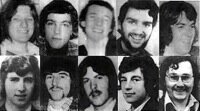
The controversy over the 1981 hunger strike has continued with
conflicting messages from the current and former Sinn Fein leaders, and
from former prisoners who were inside Long Kesh prison at the time.
The current president of Republican Sinn Fein Ruairi O Bradaigh, who
was president of Sinn Fein until 1983, has denied that the party was
aware of any British offer for the hunger strikers to end their
protest.
Mr O Bradaigh was based in Dublin at the time of the hunger strike, in
which ten men died.
"Sinn Fein's task in 1980-81 was to campaign in support of the hunger
strikers," he said. "Sinn Fein knew nothing of conditions alleged to be
on offer for settlement of the strike.
"I do not believe that the army council of the IRA was aware of such
alleged conditions either. In the interests of historical accuracy I
wish to place this information on the public record."
Last week, Sinn Fein president Gerry Adams said that details of an
offer had been passed on verbally to both the IRA and INLA prisoners
inside Long Kesh by the then Sinn Fein press officer Danny Morrison.
The intervention came through an intermediary after four prisoner had
died, and a fifth, Joe McDonnell, lay dying.
The offer is said to have included up to four of the prisoners' five
demands for political prisoner status. Mr Adams insisted that it failed
because the British government refused to allow an accredited British
official to explain the new position to the prisoners amid considerable
mutual distrust.
Although three of its members died, the INLA have denied being informed
of any offer to end the hunger strike.
However, former republican prisoner Richard O'Rawe has claimed that an
offer was conveyed (verbally) to -- and supported by -- the IRA
leadership inside the prison. More controversially, he has also
implied that a potential deal with the British was subverted by the
northern-based leadership outside the prison in order to boost
their own political agenda.
"None one of us prisoners in Long Kesh were told that the offer came in
the form of a statement from the then secretary of state for Northern
Ireland, Humphrey Atkins, which the British, as documents recently
disclosed under the Freedom of Information Act made clear, would have
been released if and when the Hunger Strike ended," Mr O'Rawe writes.
"So, why was this offer not sent in to the hunger strikers so that they
could properly evaluate the attitude of the British?
"Who took the decision to withhold it from them? And the biggest
question of all - why?"
Mr O Bradaigh has said he doubts that the northern leadership acted
autonomously without his knowledge by rejecting an offer without the
knowledge of the full IRA army council.
"The Brits were up to their tricks," he said. "They would always have
something else going on -- and that is the diversion -- while the real
thing is going on somewhere else."
Amid some calls for an independent inquiry into the matter, the families
of most of the hunger strikers have expressed anguish at being forced to
relive the trauma of the hunger strikes and have backed the Sinn Fein
position.
In extended comments on the issue, former republican hunger striker
Bernard Fox said he had been deeply distressed by the allegations.
The west Belfast man, who spent a total of 22 years in prison, was on
hunger strike for 32 days when the protest was ended and was a close
friend of Joe McDonnell.
"Joe loved life and had no desire to die but he was determined and
pragmatic and was not for settling for anything other than the five
demands - that I can say for sure.
"I wasn't in the hospital at that time and I don't know what the men
were told or not told but I do know that there was no deal.
"Offers, yes - there were plenty of offers.
"Sure wasn't Kieran Nugent given an offer of a convict's uniform in
1976, an offer he declined?"
Having been interned twice the former IRA man was returned to the
H-Blocks as a convicted prisoner in 1977 and immediately joined the
blanket protest (against prison uniforms) before volunteering for the
Hunger Strike.
He spent 32 days on hunger strike before the protest, which claimed the
lives of seven IRA and three INLA prisoners, came to an end.
"It took me 20 years before I could even speak openly about my
experiences," he said.
"It's still emotional and raw for me even now. These claims just add to
that pain.
"I can only imagine what it must be like for the families of the 10
lads.
"Bik [McFarlane] was chosen to act as our OC [officer commanding]. It's
a job no-one envied - the pressure must have been unbearable.
"Regardless of what I or anyone else may think about the political
direction he has taken since, at the time we knew he wasn't going to let
us down.
"To suggest that he in some way colluded with the outside leadership to
let his comrades die is sickening to me and does not hold up to
scrutiny.
"After the first hunger strike we, [the prisoners] were very clear we
wanted our demands in writing and delivered by a representative of the
British government so there could be no reneging this time.
"Look, I would never criticise any former blanketman. We all suffered
equally and the comradeship we had at that time was the only thing that
saw us through.
"But try as I may I cannot understand where some people are coming from
or why they would wait all these years to bring this out.
"Thatcher and the British government are responsible for the deaths of
our comrades -- that's where the blame lies."
In 1998 Fox was released from prison under the terms of the Good Friday
Agreement.
He has since parted company with Sinn Fein in disagreement over its
political direction.
"I have no personal or political agenda," he said.
"My only concern is for the families and how all this must be hurting
them.
Addressing calls for a public inquiry, he said: "I have no time for
inquiries. What you need is not an inquiry but the truth and it would be
naive to think the British will ever tell the truth.
"If there are unanswered questions my advice would be to seek
clarification.
"That way the families who have called on all this to stop can be left
in peace."
http://www.belfastmedia.com/news_article.php?ID=3732
South Belfast News 26th of October 2009
The son of murdered North Belfast solicitor Pat Finucane told a US congressional hearing today that his family will accept nothing less than a full, public and independent inquiry into his father's death.
Speaking in front of the American government's subcommittee on international organisations, human rights and oversight John Finucane said his family would never accept any kind of "charade" brought under the British Government's restrictive 2005 Inquiries Act.
A public inquiry into Pat's murder was recommended initially by Peter Cory, former justice of the Supreme Court of Canada who was tasked by the British and Irish governments to look at controversial killings.
In 2003 he recommended a public inquiry into the North Belfast solicitor's death should be held but quickly afterwards, the British Government announced that a new law was required.
In 2004 the then Secretary of State Paul Murphy told the Finucane family Pat's inquiry would come under the Inquiries Act because "much of the material that would have to be examined in this inquiry is highly sensitive to national security issues. For example many of the operational techniques that would be discussed in the inquiry would be used currently in the war against terror."
Those techniques were confirmed as collusion by former Commissioner of the London Metropolitan Police Lord John Stevens.
"The Inquiries Act 2005 prevents any inquiry from acting independently," John said.
"It forces the tribunal, no matter how independent, credible or reputable its Chairpersons, to comply with decisions made by government ministers. My family is against holding an inquiry into my father’s murder under the Inquiries Act because we will not participate in a charade.
"We want what we asked for and what was agreed between the British and Irish governments in 2001 - an independent, public, judicial inquiry, composed of international judges that are in no way associated with Britain or the British government.
"This is important, not just to my family, but society as a whole, in Ireland and internationally, because it would instil confidence in the inquiry, its work and its conclusions.
"A whitewash would do more harm than good.
"The circumstances surrounding the murder of Patrick Finucane are about much more than the killing of one man.
"They represent simply the best-known case of what could have happened to anyone and what did happen to many.
"The thing I want most of all is to know the truth about my father’s murder. If the British government is serious about resolving the situation in Northern Ireland for good and building a lasting peace, then all we ask is this one simple thing. They cannot give me back my father; the least they can do is tell me the truth."
http://www.belfastmedia.com/news_article.php?ID=3734
by Francesca Ryan
A headstone has finally been placed on the grave of a tragic Ballymurphy schoolgirl – 37 years after she was killed.
Martha Campbell (13) was shot dead on May 14, 1972 in Springhill Avenue during a period of intense and widespread violence which saw 18 people shot over a three-day period.
Following concentrated recent efforts by neighbours in the Upper Springfield area, funds were raised to enable the family to raise a headstone at Martha’s resting place in Milltown Cemetery.
Martha’s mother, Betty Campbell, told the Andersonstown News she is indebted to the community and all those who were involved in the fundraising.
“The erection of this headstone means so much to ourselves as a family and to myself as Martha’s mother, and we would like to give thanks to all the people that helped in any way at all,” she said. “A special mention must go to the young people and leaders from Corpus Christi Youth Club in Ballymurphy for all their thoughtful actions and kind words that have meant so much to us.
“Also Gerry Towe, the stonemason from Lurgan, who showed great sympathy and understanding over this past few months as well.”
Unveiled
And a small Celtic cross is soon to be unveiled at the spot in Springhill where Martha fell.
“It is comforting to ourselves as a family that this Celtic cross is not only in memory of our Martha, but also of all the young people that were killed during the Troubles. We are deeply, deeply touched that, due to the generosity and spirit of the people of the Upper Springfield, our Martha will continue to be remembered and thought about by the people that she lived with and who she loved so very much,” said Betty.
The Campbell family have been supported by Relatives For Justice as they made renewed efforts over the past two years to determine who was responsible for Martha’s death.
The Campbells discovered through the Historical Enquiries Team that no investigation into Martha’s death was ever carried out by police at the time. The lack of contemporary evidence combined with the passing of the years means that there is little or no chance of getting to the the truth about Martha’s murder.
“Based on eyewitness accounts, the velocity of the bullet that killed her and the position where Martha was actually killed, it is our family’s opinion that it was the British army that killed Martha,” said Betty, “despite what some books say about her death.”
http://www.belfasttelegraph.co.uk/news/local-national/gaddafi-deal-done-over-ira-victims-14542677.html
Victims of IRA terrorism were given fresh hope of compensation from the Libyan government today after Colonel Gaddafi indicated that a deal had been struck with Britain.
In a rare interview, Libya’s leader Muammar al-Gaddafi said that “an agreement or a legal agreement” had been concluded between his country and the British government — boosting hopes of official recognition for Libya’s role in arming the IRA at the height of the Troubles.
Speaking to Sky News in an exchange which was broadcast this morning, Col Gaddafi was asked by reporter Colin Brazier about the delegation of MPs who have been putting Tripoli under pressure to compensate victims of the IRA. They are due to travel to Libya next week to hold talks with Libyan officials about a possible package for victims of IRA terrorism.
The delegation includes DUP MPs Jeffrey Donaldson and Nigel Dodds.
When asked about the delegation’s mission, Col Gaddafi said: “To the best of my knowledge I am not aware there is a delegation, that is because I am not really interested. It does not concern me, these diplomatic or government delegations because I am out of it. But I believe that an agreement has been concluded between Libya and the UK.”
When pressed on whether a deal had actually been struck, the Libyan leader replied: “Yeah, yeah. So it closes the chapters of the past. There will be no chance of any pursuit of legal or previous actions, so that is it.”
Brazier then asked that, with compensation paid to the American victims of the Lockerbie bombing and now that it seemed there was a deal on Northern Ireland, what was Col Gaddafi’s message to the family police officer Yvonne Fletcher who was shot dead outside the Libyan Embassy in 1984.
He replied: “She is not an enemy to us and we are sorry all the time. She was on duty to protect the Libyan Embassy. This problem should be solved — but who did it? It is always like a persistent matter.”
Col Gaddafi supplied arms and explosives to the IRA during the Troubles and campaigners launched a class action for compensation.
The British Government has been hesitant in its support of the bid, although the group was given fresh hope of success earlier this year after a meeting with Prime Minister Gordon Brown.
Scotland’s decision to release Lockerbie bomber Abdelbaset Ali al-Megrahi renewed focus on the campaign and Libyan officials have since hinted that talks between Tripoli and London are progressing.
Gaddafi’s reaction to the victims’ compensation issue will further encourage the cross-parliamentary group heading for Libya in the latest bid to extract compensation from Libya.
The group will include DUP’s Nigel Dodds and Jeffrey Donaldson as well as Labour MP Andrew MacKinlay, and others whose names are still to be revealed.
Before the transcript of the Sky News interview became available yesterday, a source close to the group told the Belfast Telegraph that a deal was imminent.
However, Mr Donaldson insisted it was still some way off.
“We spoke to the Libyans in London and as a result we have been invited to Libya to speak to officials there, but a lot of work still has to be done,” he said.
“We are encouraged by the latest moves and are hopeful, but that’s all I can say.”
Last night, Willie Frazer of the FAIR organisation said: “It’s a hopeful statement, coming as it does from Colonel Gaddafi and we give it a cautious welcome.
“It shows that he has recognised our grief which must be seen as a major step. We would need to see the details and the outworkings of such an agreement, but it gives us room for optimism. We have been working hard on this for 10 years and if it materialises it will give much comforts to the families of innocent victims.”
A spokeswoman for the Foreign Office said it had facilitated next week’s visit to Libya. She said the compensation issue would be discussed and that “agreement was up to the Libyans and the people involved in the campaign”.
The Sky News interview covered a wide range of topics, including the IRA issue, the Barack Obama Nobel Peace Prize (which Gaddafi said was premature, “with some sort of hypocrisy and sycophancy”), the 1984 shooting of WPC Yvonne Fletcher, the Iran weapons of mass destruction and the Israel-Palestine situation.
http://www.belfasttelegraph.co.uk/lifestyle/books/eamon-de-valera-was-a-british-spy-14542571.html
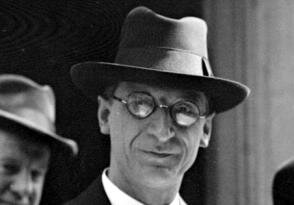
A new book to be published next month makes the shocking claim that Eamon de Valera, the founding father of the Irish Republic, was under the control of the British.
The book, provocatively titled 'England's Greatest Spy: Eamon de Valera', suggests that Dev was terrified of being executed after the Rising and was "turned" in exchange for his life. For some years afterwards, the book claims, Dev was under British control.
The 470-page hardback is published by Stacey International, a London publisher specialising in politics and history.
The author is retired US naval officer and historian John Turi from Princeton, New Jersey. He developed an interest in Irish history through his wife, who was born in Ireland. Turi has been researching his controversial book for a decade.
The case against de Valera by Turi is based firstly on a detailed analysis of Dev's emotionally stunted formative years.
He claims Dev was rejected by everyone in his early life -- his mysterious father in New York (in fact, Dev was probably illegitimate), his mother, his uncle in Ireland, who treated him coldly, even the Church, which rejected his ambitions for the priesthood because of his probable illegitimacy.
His miserable upbringing left Dev with an inadequate personality, Turi suggests, which made him susceptible to being influenced later on.
Turi is scathing about Dev's erratic behaviour during the Rising, when he was in charge of the men at Boland's Mill. He stayed awake for days, became disorientated and issued confused, sometimes ridiculous, orders. "It was not just his tactics the men questioned," Turi writes, "they questioned his sanity as well."
Dev kept his men "sitting on their heels" while a short distance away at Mount Street Bridge eight Volunteers were trying to hold off hundreds of British soldiers.
In fact the men at Boland's Mill played little or no part in the Easter Week fighting, Turi says, because Dev was so exhausted and fearful.
At the end of the week, when word reached Boland's Mill of the surrender, Turi writes that de Valera "abandoned his men and slipped out of Boland's at noon on the Sunday, taking with him a British prisoner . . . as his insurance against being shot before he could surrender".
"De Valera the cowardly, incompetent, mentally unstable officer who deserted his troops was (later) repackaged as de Valera the lonely hero fighting valiantly against overwhelming odds."
What followed was also suspicious, Turi says.
Dev later claimed that he was tried with a number of other men and sentenced to death.
Turi writes: "Not one of the men allegedly tried with de Valera ever confirmed that such a trial took place, and there is no trace in the British Public Record Office of any trial."
He also quotes the flat denial by the army prosecuting officer, William Wylie, that de Valera had been tried.
Turi also considers Dev's fragile mental state and tearful collapse at Richmond Barracks the night before he was taken to Kilmainham, to where condemned prisoners were sent.
All the events indicate that Dev was terrified of dying, Turi suggests, and that it would have been easy for the British intelligence officer Ivor Price to turn Dev into a British collaborator. Major Price was "skilled at manipulating weakness".
Turi notes that Dev was the only one of four Dublin commandants not to be tried and executed.
He dismisses theories that Dev was spared because he was born in America or because the British realised that further executions would be a mistake; as others were executed later.
The only reasonable explanation, Turi claims, is that Dev was "turned". In all, Turi sets forth a dozen instances of what he calls "de Valera's machinations that aided and abetted British interests" to support this claim.
Some of this 'evidence' concerns Dev's activities in the US after he was released from prison -- which split the powerful Irish-American lobby. Turi also says the British feared what Michael Collins might do in the North and used de Valera to engineer the situation that resulted in Collins's death.
Turi also calls Irish neutrality during the World War II "a hoax on the Irish people and a major boon for English interests".
His book, which ends with a call for a posthumous trial of de Valera, will be published in Ireland and Britain on November 30 and in the US next year.
Source irish Independent
http://www.irishecho.com/newspaper/story.cfm?id=19769
October 21, 2009 A controversy in Ireland nine years in the making is poised to reach its climax this week. The planning commission, An Bord Pleanála, delivers its decision to approve or deny Shell permission to lay a final stretch of pipeline across the five miles of boggy terrain that separate the Atlantic pipeline and the processing plant.
With the fifty-mile ocean pipeline laid and the processing plant 80 percent finished, this decision, which almost everyone expects to be in Shell's favor, will mark the completion of the Corrib Gas Pipeline project.
Although the Corrib gas field, discovered in 1996 by Enterprise Energy Ireland Ltd, was not acquired by Shell Exploration & Production Ireland Limited until 2002, opposition began in December of 2000, when local resident and retired schoolteacher, Micheál Ó Seighin, made a submission to Mayo County Council opposing development on environmental grounds.
When Mayo County Council went ahead and granted planning permission for the processing plant in 2001, Rossport residents immediately appealed the decision to An Bord Pleanála.
After holding public hearings, An Bord Pleanála overturned Mayo County Council's decision, citing the instability of peat on the site.
Objections to the plant's future toxic emissions were inadmissible at this time. They would have to wait until after the processing plant was built and when the Environmental Protection Agency was asked to grant a license.)
Meanwhile, following some behind-the-scenes machinations, Shell was encouraged to resubmit its application, and, in a telling indication of things to come, was duly granted permission second time around.
And so began the campaign of Rossport citizens opposed to the pipeline that continues to this day, despite almost no support from elected officials and precious little coverage in Ireland's media. In the process, gaeltacht residents have educated themselves on all aspects of pipeline technology, from "PIGs" to "bar pressures" to "catchment areas" and have staged peaceful protests. Their arrests and court cases will not be counted among the finer moments in Irish jurisprudence. "Have you got a family car, have you got a home? I can take all that off you and I can fine you hundreds and hundreds of thousands and I'll find a way that you will pay for it. And I'll jail every farmer in Mayo if I have to."
Though Mr. Justice Joseph Finnegan was addressing Micheál Ó Seighin, his words were directed toward all five Rossport men appearing before him in June, 2005, charged with flouting a Shell injunction against peacefully protesting the presence of Shell employees on their land, a crime (for the protesters, not the trespassers) since 2001, when Minister Frank Fahey introduced Statutory Instrument 517, giving the minister for marine and natural resources the power to grant compulsory acquisition orders for land along the pipeline route.
When the "Rossport 5" refused to knuckle under, they were jailed for contempt for 94 days until September 30, when Shell, after insisting all summer its hands were tied and that it couldn't lift the injunction - lifted the injunction.
That incident occurred on the Circuit Court level, as opposed to the local District Court level where Judge Mary Devins sits. Devins, who has presided over the preponderance of cases involving Shell protesters, remains steadfast in her convictions despite being frequently overruled, including an astonishing eight times in eight days earlier this year.
The police, on the other hand, are subject to no such unflattering second-guessing. Complaints of police misconduct to the gardai and to the Ombudsman go unanswered.
One of those unanswered complaints was filed by fisherman Pat O'Donnell, whose pleas to elected officials to safeguard his constitutional right to fish in the waters of Broadhaven Bay also fell on deaf ears.
Instead, he has had two boats confiscated by the government, all his nets and traps ($100,000 worth of gear) "removed to a safe place" by Shell, and a third boat sunk underneath him this past June, he says by four masked men.
Those who say O'Donnell did it himself can't explain why he would sink his own ship knowing he would never collect a penny on the insurance.
Though one might imagine that even the most cursory scrutiny would uncover an injustice or two somewhere in there, neither press nor politician has taken up his cause.
On the contrary, when divers located O'Donnell's boat off Erris Head at the end of August, presumably with its evidence of any criminal activity intact, the gardai termed it "unlikely" the vessel would be raised.
Even so, outsiders could be forgiven for dismissing those opposed to the pipeline as a bunch of shrill Chicken Littles with shadowy ties to Sinn Féin running around all hopped up over nothing. Because that's precisely the image instilled by the national media, with the sole exception of the Irish Times. There's been virtually no examination of the legitimacy, or lack thereof, of residents' objections to the pipeline.
During the May/June An Bord Pleanála hearings on Shell's proposed overland pipeline, only the Times carried retired army bomb disposal expert Patrick Boyle's warning that an onshore gas pipeline rupture would have "horrific" consequences for civilians in and around Rossport.
And no one reported on ABP's pipeline consultant Nigel Wright's testimony that Shell has dismissed substantial risk factors including internal corrosion, methane hydrate, construction faults, and pipe instability in peat bog, not to mention his criticism of Shell's "ultra high pressure" of 144 bar gas, almost twice the rate of normal gas transmission in Ireland. (A car tire is 2 bar.)
Then there's Shell's proposed 30-second safety plan in the event of pipeline rupture, which requires local people of all ages to walk at a pace of 2.5 meters per second over uneven peat bog to the "shelter" that Shell says is waiting at the end of their 30-second jog and that will save them from being blown to bits.
This escape plan may prove moot, however, as some people speculate that Shell's August 18 application for a Foreshore License may indicate it plans to reroute the pipe up Sruwaddacon Bay, a scenario with its own set of problems.
When I was in Rossport this summer, longtime resident Mary Moran said to me: "Every night I pray that someone, somewhere, will hear us and pay attention to what we're saying."
It appears her prayers will go unanswered.
Updated: 11/5/2009


Use the Guest Book to Comment on the web site or individual stories.
To get Irish News updates emailed to you